Hivemind Labs · Insights
What we learn building and running AI, written up properly.
Research notes from the systems we build and run, and our thinking on how a business should work with AI: where it belongs, what it costs, and what should stay with people. The numbers carry their intervals, and the results that went against us are in here too.

Perspective · · Latest
Build, buy or partner? Start with the work, not the AI
Before deciding whether to build, buy or partner, the company needs to understand the work it is trying to improve.
Research note ·
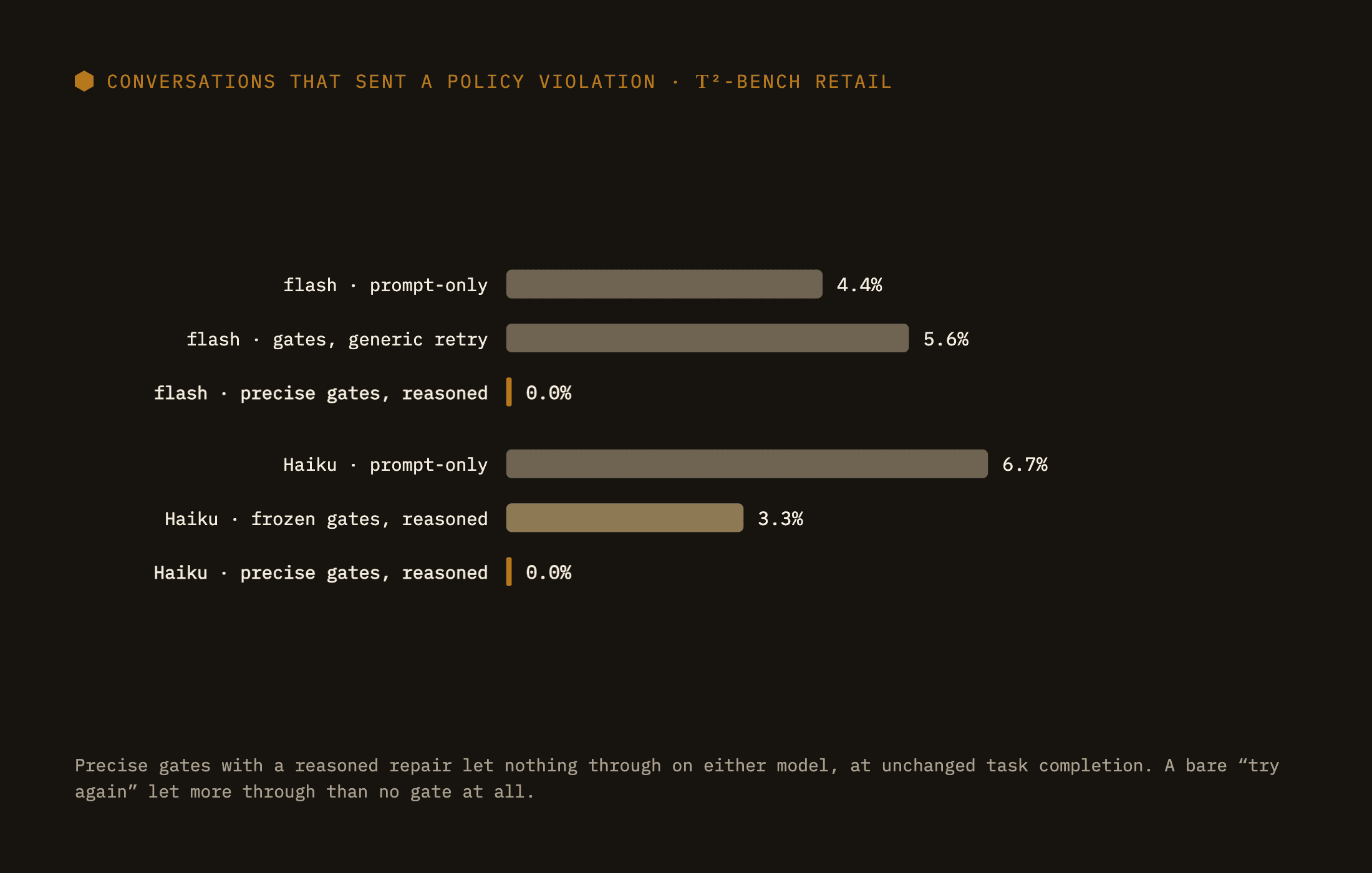
Prompt less, check more: programmatic rules for reliable customer-service agents
An AI agent can follow a rule in one reply and break it in the next. We tested code checks on proposed messages and actions, with specific feedback when a check fails. Carefully designed checks reduced detected violations in our tests. Poorly designed checks made agents less effective.
Research note ·
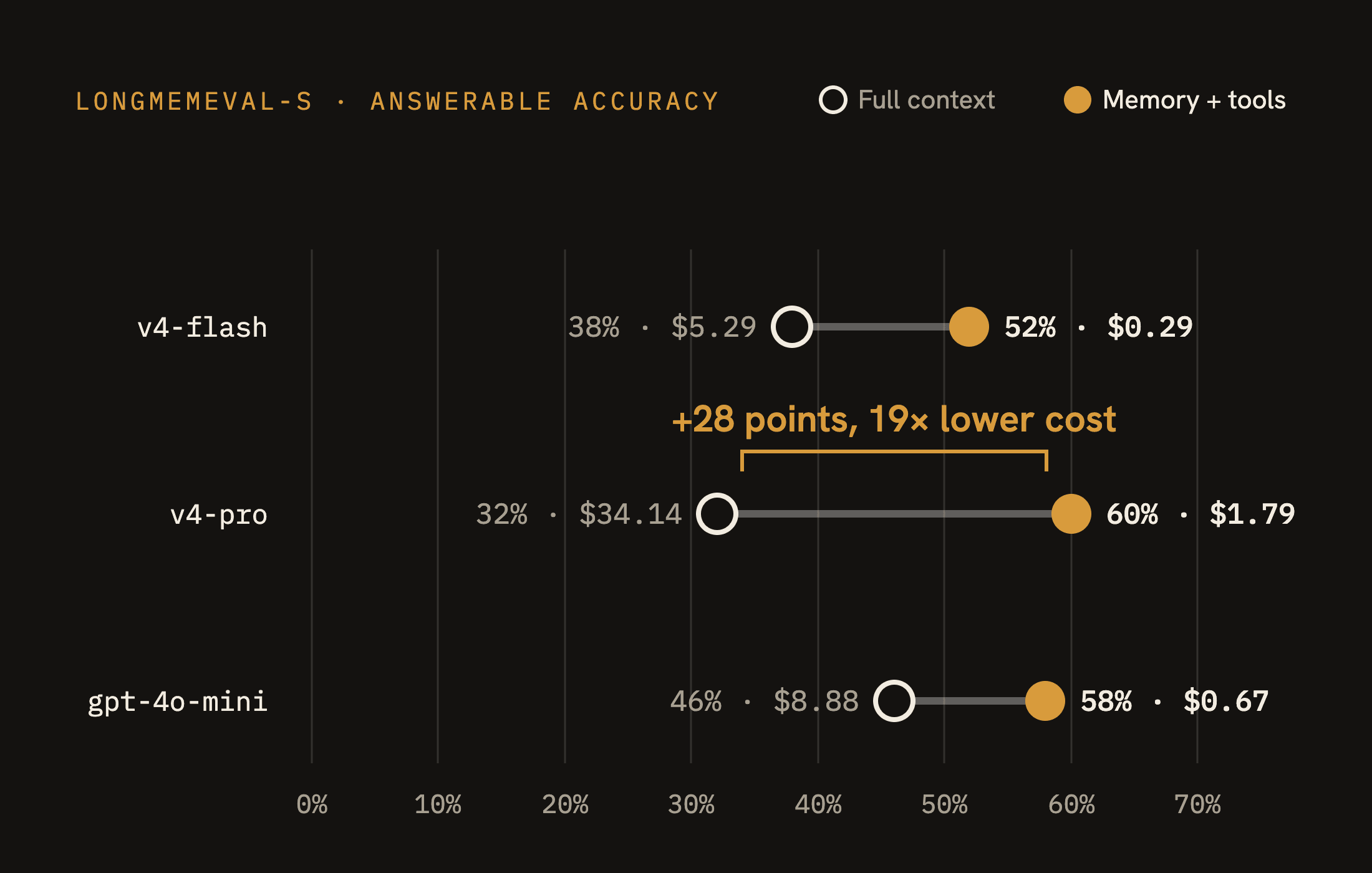
Memory over context: accurate, low-cost long-term recall for LLM agents
A compact record of dated facts, read by a cheap model with three small tools, beats handing the model the whole conversation history. It wins on every model we tested, at six to nineteen times lower cost, and it is the only configuration that never invented an answer.
From the work
Every piece starts with a system we built or a decision a client had to make. Nothing here is written from a title.
Evidence over assertion
Research notes are pre-registered and compared paired, with intervals. Differences inside the noise floor are reported as null.
Negative results included
A result that went the wrong way gets the same write-up as one that went right, with the mechanism where we found it.
Plain language
Written for the person who has to decide, not for the person who already agrees. No hype, and no product pitch.
Have a question like these in your own operation?
Everything here comes out of work we have done. The first conversation is about your business, not a product.